
Return to Exercise After Baby
Your GP said "listen to your body" at the 6-week check, then sent you out the door. This is the guide that fills the gap: what to do, when to do it, and how to know you're ready, for vaginal births and caesareans. Every claim backed by research. Every section in plain English.
- Why no one tells you how to exercise after birth
- When can I exercise after giving birth?
- Exercise before the 6-week check: what’s safe
- What does the 6-week check actually clear you for?
- Red flags: signs you’re doing too much too soon
- Postnatal exercise timeline: 0–6, 6–12 and 12+ weeks
- Postnatal depression and exercise: what the research shows
- Pelvic floor exercises after birth: the 1-in-3 problem
- Ab separation (diastasis recti): how to check it and fix it
- When can I run after having a baby?
- Exercise after a c-section
- Exercise and breastfeeding: does it affect milk supply?
- More benefits of postnatal exercise: sleep, energy, bones, long-term health
- The best postnatal exercise program: what actually works
- Postnatal exercise guidelines: Australia, WHO and ACOG
- Real mums, real finish lines
- Quick answers
- The research behind this guide
Why no one tells you how to exercise after birth
Here's a stat that explains a lot: when researchers surveyed how doctors handle the return to exercise after birth, only 15% discussed a timeline at all, and just 10% helped build any kind of plan.[28] Meanwhile, only about 1 in 4 new mums ends up getting the exercise the guidelines recommend.[26]
That's not a motivation problem. It's a guidance vacuum. You're handed detailed advice about feeding, sleeping and immunisations, and for your own body, "listen to it". This guide is the missing manual: the same graded pathway we coach mums through at Fit For Life every week, with the research to back every step.
of doctors discuss a return-to-exercise timeline at the postnatal check [28]
new mums get the recommended amount of exercise [26]
minutes of weekly activity recommended by Australia's national guidelines [22]
When can I exercise after giving birth?
The honest answer: sooner than you think, just not with the exercise you're picturing. After a straightforward vaginal birth, walking, deep-core breathing and pelvic floor work can start within days, that's not us being keen, that's the American College of Obstetricians and Gynecologists' official position.[24] Structured training builds after your 6-week check. Running and jumping wait until 12 weeks at the earliest, and only once you pass the readiness tests below.[15]
Had a caesarean? Shift each stage back 2–4 weeks and treat the 6-week check as your true starting line, you're recovering from major abdominal surgery as well as a birth.[13]
Two rules beat any calendar. Symptoms are your speed limit: bladder symptoms, heaviness, pain and bleeding outrank the week number every time. And readiness is tested, not assumed, which is exactly why we built the free Postnatal Readiness Check.
Exercise before the 6-week check: what’s safe
The first six weeks aren't a write-off, they're where the rebuild quietly starts:
- Walking. Start with 10–15 minutes and build. If your bleeding gets heavier afterwards, that was too much. Shorten the next one. (An Australian trial found group pram-walking measurably lifted mood in new mums, more on that below.[20])
- Pelvic floor exercises. Start within days of birth, even before full sensation returns. Little and often wins, and the evidence for this one is about as strong as evidence gets.[11]
- Deep breathing. Diaphragm, ribs, core and pelvic floor work as one system. Reconnecting your breath is the first real core exercise.
- Gentle mobility. Hips, upper back, neck. Feeding posture is a workout of its own. Undo it daily.
Park until later: running, jumping, heavy lifting, and crunches or front planks. Not forever. Just not yet.
What does the 6-week check actually clear you for?
The most misunderstood moment in postnatal recovery is the GP saying "you're cleared for exercise." Here's what that actually means, and what it doesn't.
The 6-week check is a medical review: healing, blood pressure, mood, contraception. It is not a fitness assessment. Nobody tests your pelvic floor under load, checks your ab separation beyond a quick feel, or watches you hop on one leg. "Cleared" means cleared to begin a graded return, not to walk back into your old program on Monday.
The two next steps the evidence supports: a pelvic floor physio assessment (standard advice in Australia for every mum, symptoms or not) and a structured, coached program, because as you'll see below, structure and supervision are what the research says actually works.[29] Not sure where you sit? The free Readiness Check takes five minutes.
Red flags: your body saying "not yet"
- Bleeding restarts, or gets heavier after activity
- A heavy or dragging feeling in your pelvis during or after exercise
- Loss of bladder control when you move, lift, cough or run
- Pain, pelvic, abdominal, or around a caesarean scar
- Doming or bulging along your midline when you exert
None of these mean exercise is off the table. They mean see a pelvic floor physio and adjust the plan. Pushing through is how a small issue becomes a long one.
Postnatal exercise timeline: 0–6, 6–12 and 12+ weeks
Weeks 0–6 · Foundation
- Walking, building duration gradually
- Pelvic floor activations daily[11]
- Breathing and gentle mobility
- Caesarean: rest and wound healing lead the first two weeks
Weeks 6–12 · Rebuild
- Pelvic floor physio assessment
- Structured low-impact strength, bodyweight to light load, coached
- Deep-core work, the kind that closes ab separation, not crunches[9]
- This is where our Core Restore program lives
Week 12+ · Return to impact & load
- Running and impact, once the readiness tests pass[15]
- Progressive strength training with real load
- Group training with bub alongside at Mums & Bubs
Postnatal depression and exercise: what the research shows
One in five Australian mums experiences perinatal depression or anxiety, it's the most common complication of having a baby, and it costs the country an estimated $877 million a year.[1] Here's what the research says exercise does about it:
A meta-analysis covering 186,412 women, one of the largest bodies of evidence in this whole field, found physically active mums had 27% lower odds of developing postnatal depression.[2] For women already experiencing symptoms, exercise works as treatment too, with the biggest effects in those who need it most.[3]
Even better, the research found the sweet spot, and it's refreshingly doable: 35–45 minutes, three to four times a week, at moderate intensity.[4] That's three or four group sessions. Not two-a-days. Not bootcamp at 5am.
And the group part matters. An Australian trial took mums with postnatal depression and split them into a pram-walking group and a social-support-only group. The walkers improved significantly more: exercising together beat socialising alone.[20] In another Australian program, 70% of mums who started group pram-walking were still going 16 months later.[21] Community isn't the nice-to-have of postnatal fitness. It's the mechanism.
lower odds of postnatal depression in active mums, 186,412 women studied [2]
minutes, 3–4×/week: the most effective dose found against postnatal depression [4]
of mums in a group walking program were still exercising 16 months on [21]
Pelvic floor exercises after birth: the 1-in-3 problem
One in three women who've had a baby have bladder control issues. That's not a scare line, it's the Continence Foundation of Australia's own number, confirmed by a meta-analysis of more than 35,000 women.[10] It's so common that mums joke about it, cross your legs before you sneeze, don't jump on the trampoline. Common, though, is not the same as normal, and it's definitely not the same as permanent.
The fix has a Cochrane review behind it: the gold standard of medical evidence. Across 22 trials and 8,485 women, pelvic floor muscle training cut the risk of postnatal incontinence by about 29%, and helped women who already had symptoms get better.[11] The catch: most women do the exercises wrong, or not at all, without assessment and coaching. That's why every pathway in this guide runs through a pelvic floor physio, and why our Core Restore program treats the pelvic floor as the foundation, not an afterthought.
Ab separation (diastasis recti): how to check it and fix it
During pregnancy, the two halves of your "six-pack" muscle move apart to make room. That's not damage, it's design. The question is what happens next: at six weeks postpartum, about 60% of mums still have a measurable separation. By 12 months, without targeted work, 1 in 3 still do, because natural recovery mostly plateaus around the two-month mark.[8]
Check yourself in 30 seconds: lie on your back, knees bent. Lift your head slightly. Feel above and below your belly button. A gap wider than two fingers, a bulge, or doming down your midline when you strain = worth a professional look.
The good news is unambiguous: a meta-analysis of nine randomised trials found targeted core exercise closes the gap significantly more than waiting it out.[9] What works is deep-core training, breath-led tension, transverse abdominis work, progressive load. What doesn't: cranking out crunches on day one, or waist trainers. And if your youngest is three and you've only just heard the words "diastasis recti": it still responds to training. The window doesn't close.
When can I run after having a baby?
The international guidance is clear on the floor: no running before 12 weeks postpartum.[15] But the more useful shift in the 2024 international consensus (118 clinicians across three Delphi rounds) is that readiness is a test you pass, not a date you reach.[16] Before your first run, you should be able to do all of this, with zero bladder symptoms, heaviness or pain:
- Walk 30 minutes, briskly, comfortably
- Balance on one leg for 10 seconds each side
- 10 single-leg squats each side
- Jog on the spot for 1 minute
- 10 forward bounds, 10 hops on the spot each leg
- 10 "running man" reps each side
Fail one? That's not a verdict, it's your training list, and a few weeks of targeted strength usually closes it. The consensus also recommends walk-run intervals, calf and hip strength, and adjusting for sleep and energy (the 4am feed is part of your training load whether you like it or not).[17] Our Run Club coaches this return week by week, Mel and Tia below both came through it.
Exercise after a c-section
A caesarean is a birth and major abdominal surgery, so everything shifts right a few weeks, and the research on surgical recovery backs a planned, progressive return over both extremes of "rest for three months" and "push through".[13] Early weeks: walking only, nothing heavier than your baby, let the wound lead. Weeks 6–8, with clearance: gentle core re-connection and scar mobilisation. Weeks 10–12: progressive strength, watching for pulling at the scar. Numbness and tightness around the scar for months? Common, and trainable-around. Pain is the line, that gets assessed.
Exercise and breastfeeding: does it affect milk supply?
You may have heard exercise "sours the milk" or tanks your supply. This was settled in the New England Journal of Medicine. In 1994. Researchers had breastfeeding mums do 45 minutes of aerobic exercise, five days a week, for 12 weeks. Result: no effect on milk volume, no effect on composition, no difference in their babies' growth.[18] A modern systematic review confirms it, including for vigorous exercise.[19]
The practical bits: feed or express before training (comfort, not supply), wear a properly fitted supportive bra, and drink more water than you think you need. Your supply cares about rest, food and hydration, not your squats.
More benefits of postnatal exercise: sleep, energy, bones, long-term health
Four more things the research says you get back from training, beyond the obvious:
- Better sleep, less fatigue. Yes, really: meta-analyses of postpartum trials found exercise improved sleep quality and reduced fatigue, with the fatigue evidence rated high-certainty. Movement gives back more energy than it takes.[14]
- Your bones. Breastfeeding sends ~200mg of calcium a day to your baby, and spine/hip density can dip 3–10% during lactation. A randomised trial found resistance training significantly slowed that bone loss.[12] Another argument for lifting, not just walking.
- Long-term metabolic health. If you had gestational diabetes, your lifetime risk of type 2 diabetes is nearly 10× higher[6], and every 5kg retained postpartum adds roughly 27% to that risk.[5] Structured diet-and-exercise programs measurably move those numbers.[7]
- Connection. Loneliness in new mums is measured at anywhere from 32% to 100% across studies[27], and training with other mums attacks the two biggest problems of the first year, deconditioning and isolation, in the same 45 minutes.
The best postnatal exercise program: what actually works
Remember that number from the top of this guide: only about 1 in 4 new mums gets the recommended amount of exercise.[26] After everything you've just read about what training gives back, mood, sleep, continence, strength, long-term health, that gap deserves an explanation. It isn't laziness, and it isn't lack of information. The research has mapped it precisely.
Study after study, the same three barriers top the list:[28]
- Fatigue. Not "bit tired", broken-sleep-for-months fatigue, where a 6am bootcamp isn't inspiring, it's insulting. Any program that ignores your sleep debt is programming for someone who doesn't exist.
- Time. The old routine, drive to the gym, train, shower, drive home, needs a two-hour window. New mums get 45-minute windows, at unpredictable times, that a nap schedule can revoke without notice.
- Childcare. The big one. If exercising requires someone else to hold the baby, exercise happens exactly as often as someone else can hold the baby.
Underneath those three sit the quieter ones the qualitative research keeps finding: guilt (time on yourself can feel like time taken from the baby), lost confidence in a body that feels unfamiliar, worry about bladder symptoms, and the simple fact that after birth, everyone, including the health system, stops asking about you. Australian research adds one more finding worth knowing: the strongest enabler is support, a partner, and other mums around you.[28]
Now look at what most of the market offers against those barriers. An app can't hold your baby. A PDF doesn't notice you've been doing your ab work wrong for six weeks. An 8-week block ends right as your habit was forming, and if the intake opened last month, you're waiting until next term. Which is a big part of why a 2024 meta-analysis of 31 studies concluded that current attempts to get new mums moving are largely missing the mark.[29]
But the same research shows exactly what does work. The programs that deliver real results, on depression, on weight, on sticking with it, share four specific features:[29]
| What the evidence says works | How we've built Fit For Life around it |
|---|---|
| Supervised: coached, not self-guided | Every session run by qualified coaches who know your birth history and scale everything individually |
| Structured: scheduled weekly frequency and progression | Fixed weekly Mums & Bubs sessions and a programmed pathway from Core Restore to strength, at the 3–4×/week dose the depression research points to[4] |
| 12+ weeks long: not a short block | We run every week of the year. No 8-week cohorts, no terms, no waitlists. Your program doesn't end at week eight because the calendar says so |
| Social support built in | Group training with other local mums: the same mechanism the Australian pram-walking trial showed beats socialising alone[20] |
And the childcare barrier? Bring bub to the session. That's not a workaround, it's the design.
Postnatal exercise guidelines: Australia, WHO and ACOG
| Who | The postpartum recommendation |
|---|---|
| Australian Government national guidelines (2021)[22] | Build back to 150–300 min/week moderate activity; strength training 2+ days/week; daily pelvic floor exercises; gradual return after the 6-week check, adjusted for birth type |
| World Health Organization (2020)[23] | 150+ min/week moderate aerobic activity for all postpartum women without contraindication; benefits include reduced postpartum depression risk |
| ACOG (2020)[24] | Some women can resume light activity within days of an uncomplicated birth; regular activity is "an essential factor" in preventing postpartum depressive disorders |
| RANZCOG[25] | Endorses the national guidelines: mixed aerobic + strength, safe and beneficial for mother and child |
Real mums, real finish lines
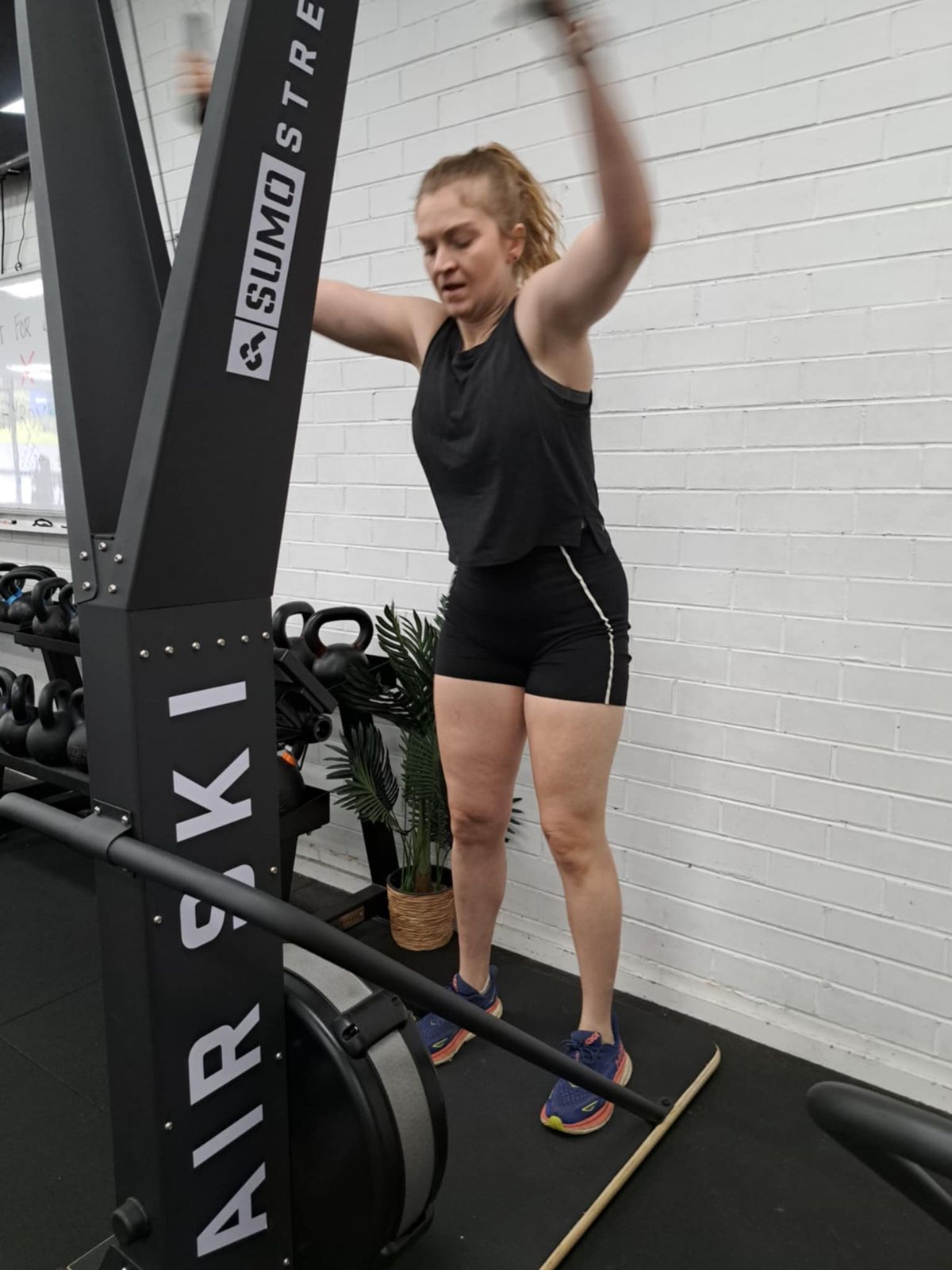
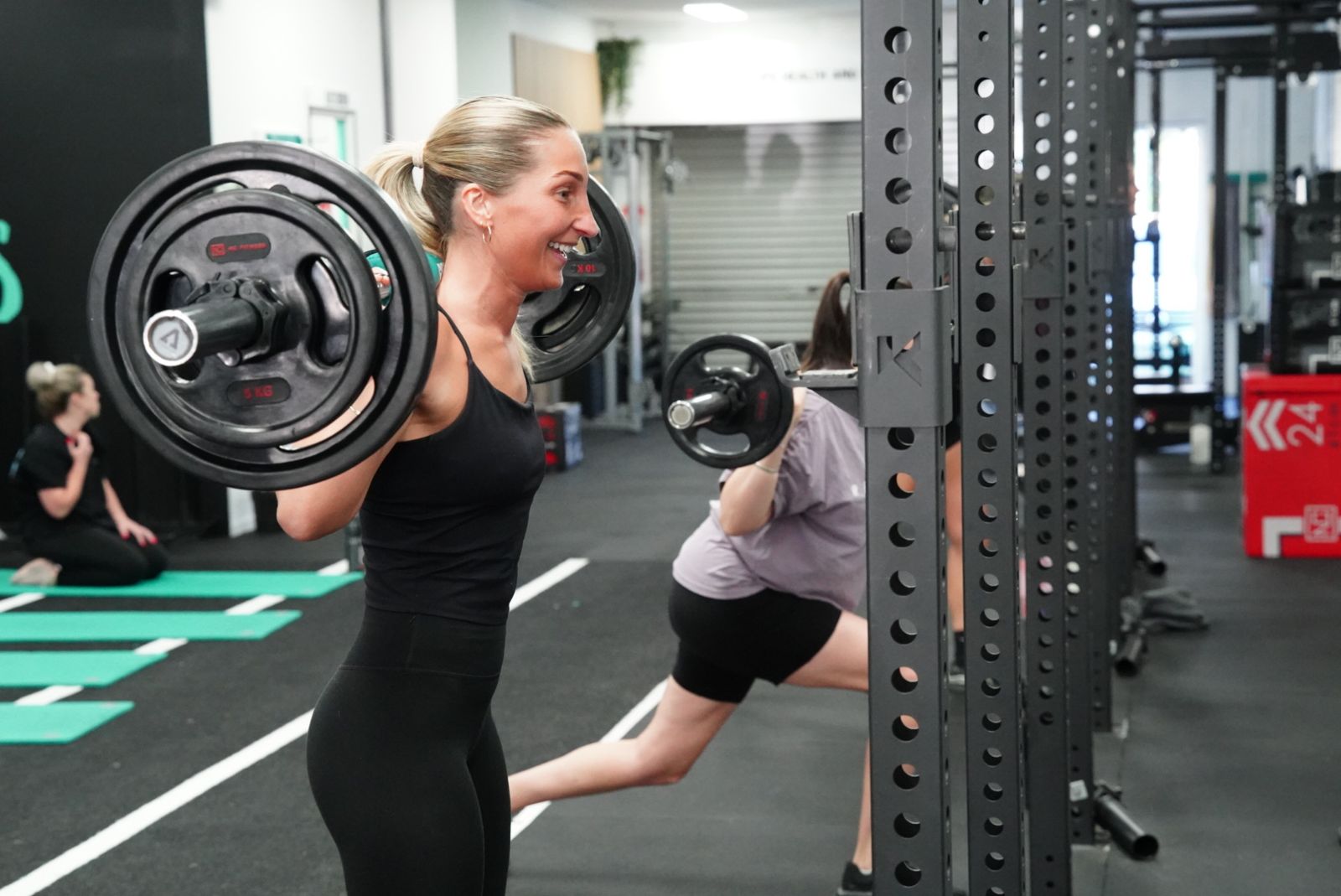
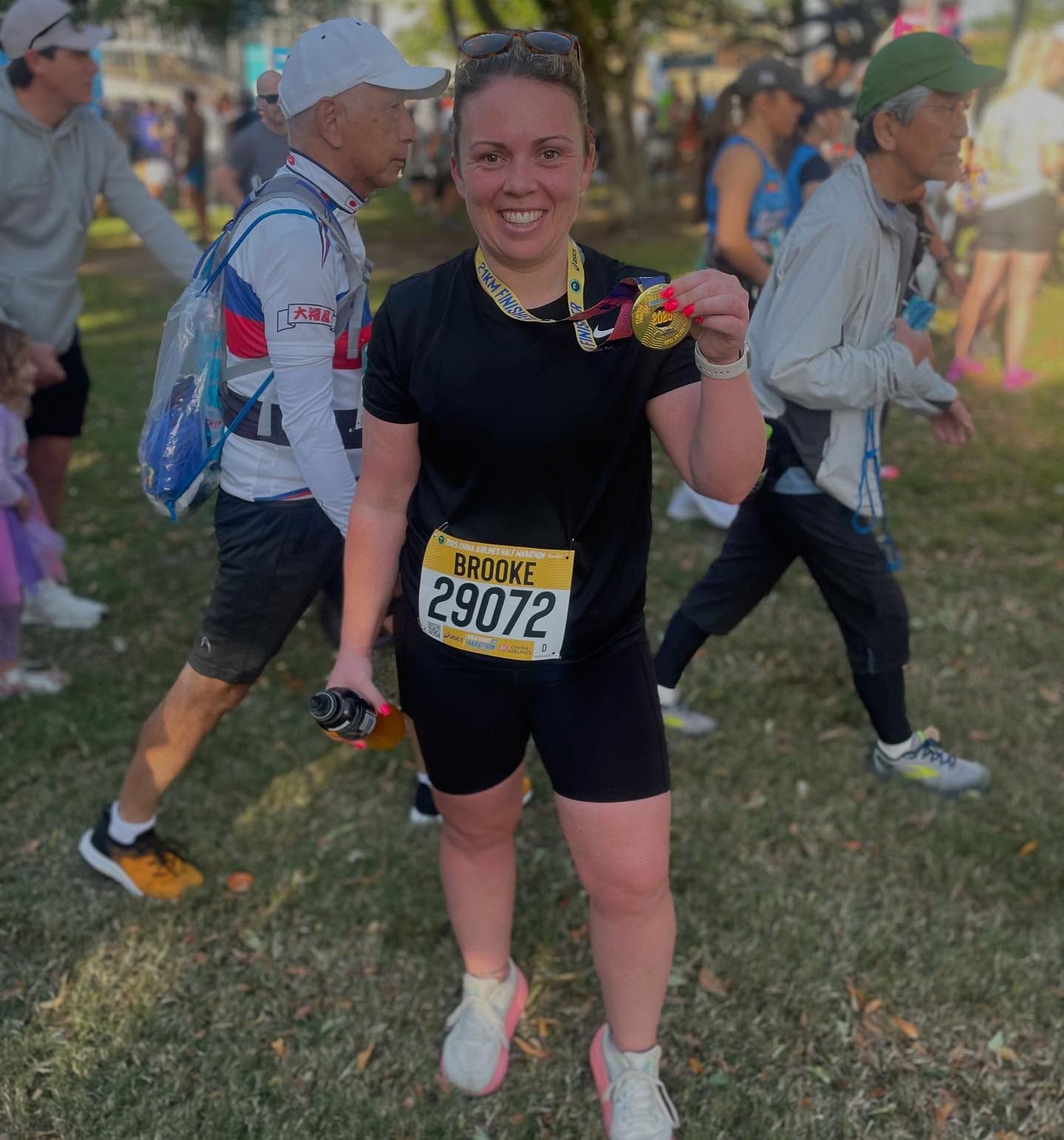
Everything above is what the research says. This is what it looks like when it's coached properly, week after week, at a gym in Upper Ferntree Gully:
Find out exactly where you're at, free
Five minutes, no email required. The Postnatal Readiness Check tells you what your body's ready for right now and what your sensible next step is, even if that step is a physio, not us.
Take the Readiness Check →Quick answers
Can I exercise before the 6-week check? Yes, walking, pelvic floor work and breathing from the first days.[24] Structured training waits for clearance.
How much should I aim for? The national guidelines say build to 150–300 minutes a week plus strength work twice a week[22], and the mental-health sweet spot is 35–45 minutes, 3–4×/week.[4]
Do I really need a pelvic floor physio if I feel fine? It's the standard Australian recommendation for every mum, one assessment catches what the GP check doesn't test. A third of mums have symptoms; most were never assessed.[10]
Is it too late if my baby is 1, 2, or 5? No. Ab separation, pelvic floor strength and fitness all respond to training years later.[9] The pathway's the same, you just start it whenever you start it.
Can I bring my baby to training? At Fit For Life, yes, that's the whole design of Mums & Bubs, and you can join any week of the year. No intakes, no waitlists.
The research behind this guide
- PwC Australia for Gidget Foundation, The Cost of Perinatal Depression and Anxiety in Australia, 2019. gidgetfoundation.org.au
- Yuan M, et al. Dose-response meta-analysis of 186,412 women. Frontiers in Psychiatry, 2022. PubMed
- Poyatos-León R, et al. Meta-analysis of exercise and postpartum depression, Birth, 2017; and McCurdy AP, et al. Obstetrics & Gynecology, 2017. PubMed
- Xu H, et al. Network meta-analysis, 26 RCTs. PLOS ONE, 2023. PLOS ONE
- Systematic review: weight management after gestational diabetes. Nutrients, 2023. PMC
- Vounzoulaki E, et al. Meta-analysis, 1.3M women. BMJ, 2020. PubMed
- Meta-analysis of 18 RCTs: diet/activity interventions after GDM, 2024. PubMed
- Sperstad JB, et al. Diastasis recti prevalence cohort. Br J Sports Med, 2016. PubMed
- Meta-analysis of 9 RCTs, non-operative diastasis management. Hernia, 2026. PMC
- Moossdorff-Steinhauser HFA, et al. UI prevalence meta-analysis, 35,064 women. Int Urogynecol J, 2021; Continence Foundation of Australia. Springer
- Woodley SJ, et al. Cochrane review CD007471: pelvic floor muscle training, 22 trials, 8,485 women. 2020. Cochrane Library
- Lovelady CA, et al. Exercise and bone density during lactation. Med Sci Sports Exerc, 2009. PubMed
- Systematic reviews: postpartum rehabilitation and ERAS after caesarean. Frontiers in Medicine, 2021; PMC, 2024. Frontiers
- Postpartum exercise, sleep and fatigue meta-analyses. Br J Sports Med, 2025. PubMed
- Goom T, Donnelly G, Brockwell E. Returning to Running Postnatal guidelines, 2019. Full text
- Christopher SM, et al. International Delphi consensus: return-to-running readiness. Br J Sports Med, 2024. PubMed
- Deering RE, et al. Delphi consensus: return-to-running programme design. Br J Sports Med, 2024. PubMed
- Dewey KG, et al. Aerobic exercise and breast-milk volume/composition. New England Journal of Medicine, 1994. NEJM
- Be'er M, et al. Physical activity and human milk. Breastfeeding Medicine, 2020. Journal
- Armstrong K, Edwards H. Pram-walking RCT. Int J Nursing Practice, 2004. Wiley
- "Stroll Your Way to Well-Being" program evaluation, 2001. ScienceDirect
- Brown WJ, et al. Australian guidelines for physical activity in pregnancy and postpartum. J Sci Med Sport, 2022. JSAMS
- Bull FC, et al. WHO 2020 guidelines. Br J Sports Med, 2020. PubMed
- ACOG Committee Opinion No. 804, 2020. ACOG
- RANZCOG / Commonwealth Dept of Health evidence-based guidelines, 2021. health.gov.au
- Psychosocial predictors of postpartum physical activity. J Behav Med, 2019. PMC
- Kent-Marvick J, et al. Loneliness in pregnant and postpartum people: scoping review. Systematic Reviews, 2022. BMC
- Barriers to exercise in postpartum women: mixed-methods systematic review. J Women's Health Physical Therapy, 2021; Saligheh M, et al. BMC Pregnancy Childbirth, 2016. BMC
- "Encouraging New Moms to Move More, Are We Missing the Mark?" Meta-analysis, 31 studies. JOSPT, 2024. JOSPT
This guide is general information for Australian mums, not individual medical advice. Always follow the guidance of your GP, obstetrician or pelvic floor physiotherapist, especially after a complicated birth. If something hurts, feels heavy or just isn't right: assessed first, trained second.